





Fitting pushrod tube seals
Fit the pushrod tube seals in the correct sequence immediately before placing the cylinder head on the engine block. The support rings, springs, cups and locating tabs must fit together correctly for the seal to work properly.
Difficulty: 1/3 for this sub-operation · Estimated time: 5 minutes with the cylinder head already removed and prepared. Cylinder head removal and refitting are not included in this time.
Parts and preparation
Required: a suitable pushrod tube seal for the 435 or 602 cc version (part number 1012732), matching springs (1012736), cups (1012734) and support rings. Check compatibility with your engine and the condition of the pushrod tubes.


Keep the work area and parts clean. Check the tubes and sealing surfaces for damage and distortion. Remove the new seal from its packaging only immediately before fitting and fit it just before placing the head on the block.
This guide describes fitting the seals. Use the correct engine procedure for head removal, tightening sequence, tightening torques and valve clearances. Do not use the head nuts to pull a misaligned seal into position.
1. Fit the support rings to the tubes
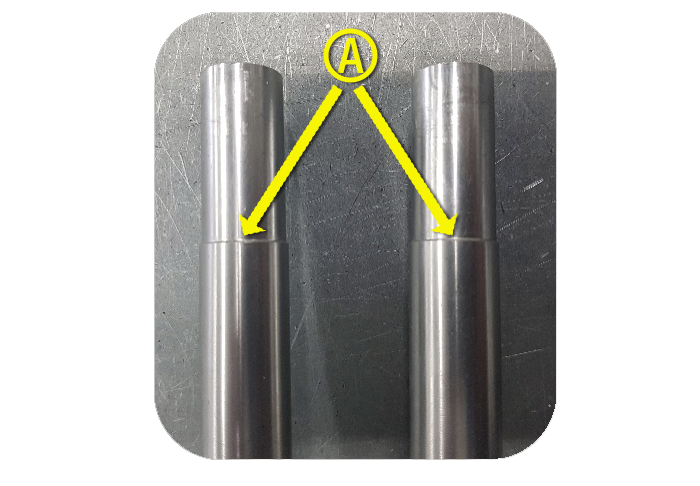
Slide the support rings onto the pushrod tubes. Each ring must sit against the shoulder marked A, as shown in the illustration.
2. Fit the springs
Place the springs on the support rings. The springs shown have no particular fitting direction. Ensure that each spring sits straight and is correctly supported on the ring.

3. Align the cups on the seal
Place the cups on the pushrod tube seal. Align the tabs on the seal carefully with the corresponding notches in the cups. A tab must not be trapped beneath an unnotched edge.

4. Fit the complete seal to the cylinder head
Place the assembled seal and cups onto the tubes and springs. Note the orientation: the tabs point towards the inside of the cylinder head. Compare the position with the detail photograph before continuing to fit the head.


Final checks
- Both support rings sit against their shoulders.
- Both springs sit straight on the rings.
- The cups surround the seal correctly and all tabs fit into their notches.
- The tabs point inwards; the seal is not twisted, damaged or trapped.
- After completing the engine assembly correctly, check the joints for oil leaks.
