



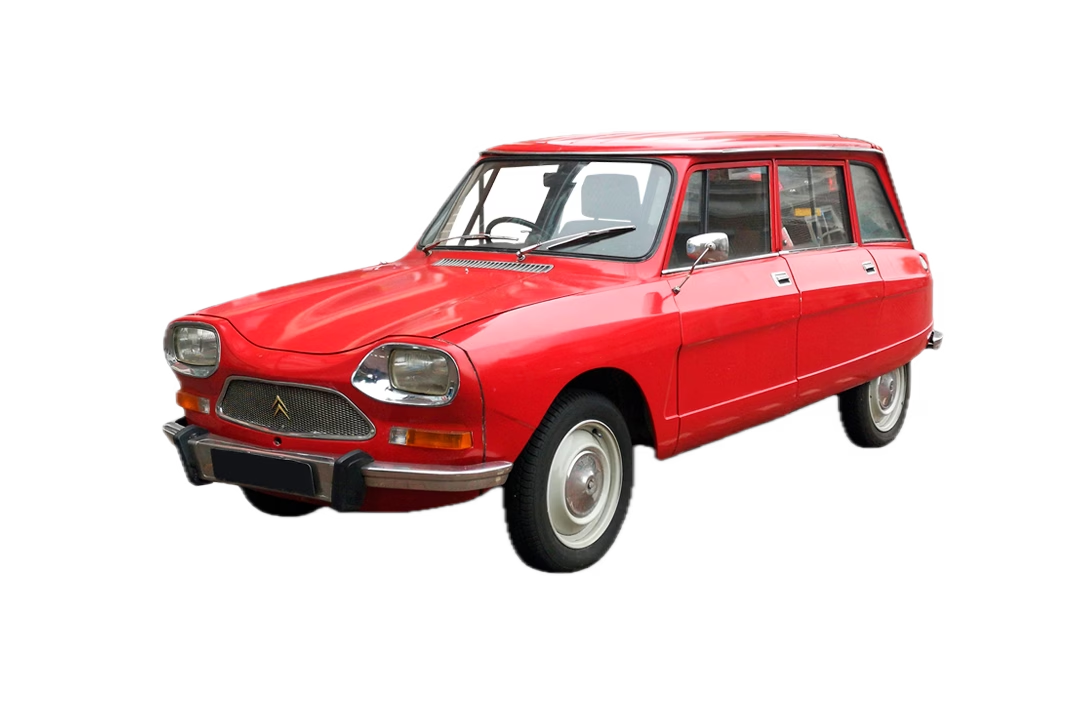


Citroën A-type carburettors through the years
Identify the main Solex and Zenith carburettors used on the 2CV and compare engine, clutch and complete type designation before replacement.
Read the type designation first
Similar carburettor bodies can contain different jets, venturis and controls. Record the make, complete type code and any identification mark. Then check engine code and whether the clutch is conventional or centrifugal.

From 425 cm³ to later engines
| Period / engine | Main version | Feature |
|---|---|---|
| 425 cm³, 1954–1955 | Solex 26 BCI | Early twin-jet version; 17 mm venturi |
| 425 cm³, late 1955 onward | Solex 26 BCI | Single-jet version; 15.5 mm venturi |
| 425 cm³, from 1957 | 26 BCI / 26 CBI | Different throttle dashpot arrangements |
| 425 cm³, early 1960s | 26 CBI / 26 IBC | Version depends on clutch; venturi changes with engine |
| 425 cm³, from 1963 | 28 CBI / 28 IBC; Zenith 28 IN on some AZU | New engine and intake generation |
| 425 cm³ AZU, from 1967 | Solex 32 PICS | Later 21 hp version |
| 602 cm³ AK 350 | Solex 30 PICS | Early 602 cm³ application |
| 2CV 4 / 6, from 1970 | 34 PICS 4 / 34 PCIS 4 | PICS mechanical; PCIS centrifugal according to version |
| From 08/1972 | 34 PICS 6 / 34 PCIS 6 | Modified and standardised version |
| From 1976 | 34 PICS 10 / 34 PCIS 10 | Protected mixture screw |
| 2CV 6, from 07/1978 | 26/35 CSIC or SCIC depending on clutch | Twin-choke carburettor; check exact identification mark |
Some historical summaries contain conflicting dates and type codes. This table supports identification. Always order jets and repair parts by the full code of the carburettor actually fitted.
Centrifugal clutch and throttle dashpot
The associated carburettor control helps manage engine speed when releasing the accelerator. A carburettor intended for another clutch type can therefore operate incorrectly even if its flange fits.
Checks before replacement
- Flange, intake manifold and any insulating spacer.
- Jet, venturi and float-needle types and sizes.
- Choke and throttle cable controls and connection positions.
- Vacuum connections and required sealing of unused ports.
- Spindle play, leaks and base flatness.
A repair kit cannot be selected merely by “single-choke” or “twin-choke”. Follow the procedure for the exact type. Check ignition, air leaks and fuel supply before altering carburettor settings.
Need help identifying the right version?
Send Citroparts the model, year and clear photographs of the fitted parts so we can help you choose. Contact us.
