



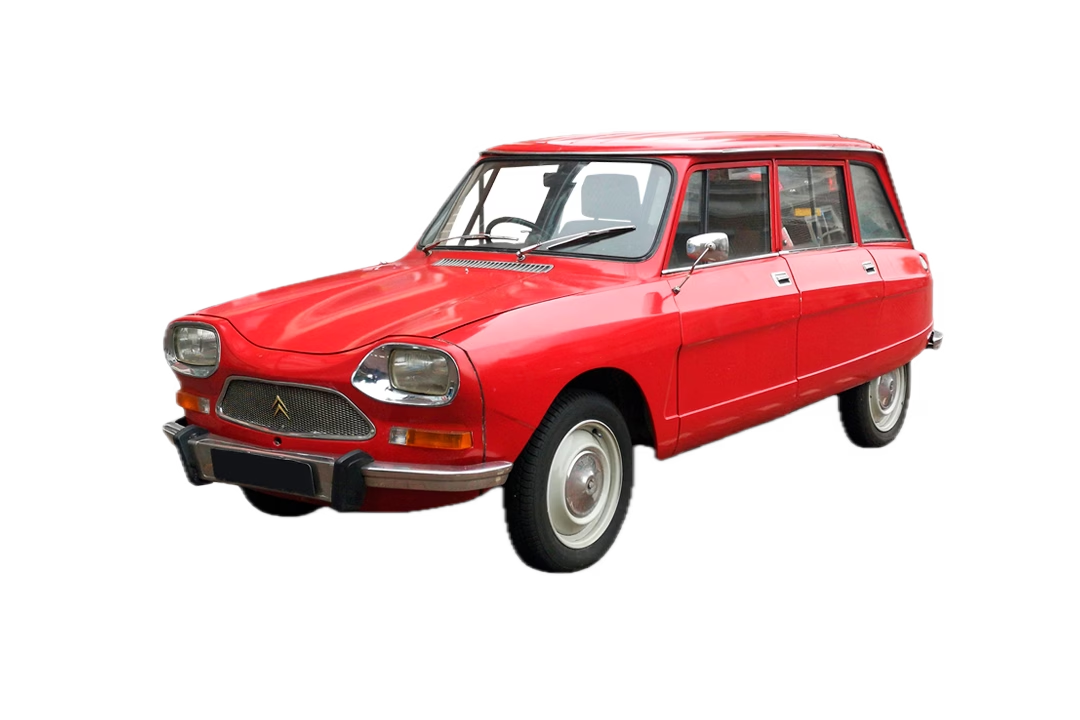


Chassis number stamping and certification for classic Citroëns
A chassis number is an essential part of a vehicle’s identity. After a chassis replacement, when a number is illegible or when the documents do not correspond, simply stamping the number again is not enough. The technical execution, the file and the applicable procedure must all match.
Citroparts and CQS Classics are sister companies under the same owner. Citroparts supplies the parts; CQS Classics is the specialist workshop that assists owners of 2CV, Méhari, Dyane and other classic Citroëns with chassis selection and installation, professional number stamping and the associated documentation. We always assess what is possible or required for each individual vehicle and file.
When is guidance concerning the chassis number important?
- When replacing a worn or damaged chassis.
- When the existing chassis number is difficult to read or has disappeared.
- When the chassis, vehicle documents and identification do not clearly correspond.
- During restoration, import, export, homologation or preparation for a technical inspection.
- When you want certainty about the appropriate procedure before buying a chassis.
Mandates and professional number stamping
CQS Classics holds specific mandates for restamping chassis numbers and issuing the related certificates within the applicable procedures. For chassis from Méhari Club Cassis, De Graaf and Warny, among others, CQS Classics is a specialist contact in Belgium for chassis-number procedures covered by the agreed mandates.
When Stellantis or L’Aventure Citroën issues a mandate for a specific file, a chassis number can be restamped in the prescribed way and the corresponding certificate can be issued. This is not automatically possible for every file: prior inspection and authorisation remain decisive.
Citroën marking or CQS marking
Citroën chevrons
A number stamped with Citroën chevrons is used exclusively when the file falls under a formal mandate from Citroën, Stellantis or L’Aventure Citroën. This may be relevant for certain original chassis or an official manufacturer procedure for an illegible chassis number.
CQS marking or CQS seal
For other chassis for which CQS Classics is mandated, a CQS marking or seal may be used. This keeps it traceable who carried out the stamping, under which file and with which certificate. The selected marking always depends on the chassis, supplier and applicable mandate.
Certificate and required documents
This check helps prevent misuse and reduces the risk of the same chassis number being used for more than one vehicle. Depending on the file, the certificate of conformity, the most recent inspection certificate, photographs of the vehicle, the existing number and the identification plates may also be required.
The certificate belongs with the vehicle file and must be available for presentation during a technical inspection, homologation or administrative check in accordance with the applicable procedure. Keep it together with the vehicle documents, invoices and photographs of the work carried out.
Manual or industrial stamping
| Method | Characteristics | Application |
|---|---|---|
| Manual stamping | Traditional hand punches with small natural differences in depth, position and alignment. | May visually suit certain historic vehicles and files better. |
| Industrial stamping | Professional equipment producing a uniform, neat and reproducible result. | Used when the chassis, supplier, mandate and desired finish allow it. |
The method is therefore not a free stylistic choice. It is determined by the specific file, the type of chassis, the supplier and the mandate.
This short video shows the industrial stamping of a chassis number.
How is a file handled?
- Intake: we collect vehicle details, documents, photographs and the purpose of the file.
- Inspection and advice: we assess the chassis, number, marking, available documents and applicable procedure.
- Quotation and execution: after approval, we plan the number stamping and any chassis work.
- Certificate and reporting: once the file is complete and correct, we handle the administrative completion within the applicable mandate.
- Inspection or homologation: if desired, we assist with the next steps.
After a chassis replacement
After replacement, the vehicle may have to be presented for technical inspection again. In a Belgian file, the cut-out section bearing the old chassis number may also have to be shown or handed over at the first inspection so that it cannot be reused. The precise procedure depends on the vehicle and the competent authority; have this verified before work begins.
Rules for number stamping, certificates, inspection and homologation also differ between countries. For international files, we check in advance which documents we can provide and which local steps are still required.
Have a file assessed
Please provide the make and model, year of manufacture, chassis number, country of registration, a copy of the registration certificate and clear photographs of the vehicle, the existing chassis number and the identification plates. This enables us to explain the available options accurately.
